Country C is a low-income economy situated in Africa. Its main export is raw copper, which accounts for a large proportion of its export earnings. Figure 1 illustrates the market for raw copper in the country in US dollars (US$) per kg. The world price of copper is $150 per tonne.
Domestic price of copper ($)
Domestic demand (m tonnes)
Domestic supply (m tonnes)
50
100
50
75
90
60
100
80
70
125
70
80
150
60
90
175
50
100
ai. Calculate the value of raw copper exports per year for the nation? [2]
$150 x 30m tonnes = $4,500 million
The government of country C is concerned about world demand for the metal, with world price predicted to fall to $125, both domestic supply and demand would be unaffected by such a change.
ii. Calculate the new level of revenue resulting from the fall in world raw copper prices. [2]
10m x $125 = $1,250,000 million
ii. Calculate the PES and PED for raw copper if the price rises from £150 to £175 [4]
% change in demand = 16.67 and % change in price is 16.67 so the PED = 1
% change in supply = 11 so PES = 11/16.67 = 0.66
v. Explain why both the PES and PED for the commodity is likely to be inelastic? [4]
As a primary commodity copper is likely to be supply inelastic because changing the output of the product mined is relatively difficult and so a change in price will not automatically lead to a change in quantity supplied. For example if the price falls to $250 per tonne then output will fall by a lower than proportional quantity.
Demand is also likely to be price inelastic because copper forms an important part of many finished products e.g. batteries, electronics, smart phones e.t.c. and there is little or no substitutes for those products.
Table 1: Macroeconomic indicators of country C
2022
2023
GDP ($m)
80,000
83,500
Percentage of GDP earned by primary sector
60%
58%
Export revenues (million $s)
11,000
12,500
Import revenues (million $s)
8,500
10,400
Population (millions)
6.5
6.76
Unemployment %
30%
32%
bi. Calculate the rate of economic growth in the economy between 2022 and 2023. [1]
(3,500 / 80,000) x 100 = 4.38%
ii. Calculate the GDP per capita (to the nearest $) in both 2022 and 2023. [2]
2022: 80,000 / 6.5 = 12,307 per capita
2023: 83,500 / 6.76 = 12,352 per capita
iii. Calculate the current account balance in both 2022 and 2023. [1]
2022: 11,000-8,500 = $2,500m (surplus)
2023: 12,500-10,400 = $2,100m (surplus)
iv. Using at least two items of information provided, explain why the government of Country C should be very concerned at the prospect of a fall in world copper prices. [4]
The government of country C should be very concerned at the prospect of a fall in world copper prices for a number of reasons. The first of these is that the mineral comprises a significant part of export earnings (around 30% in 2023). If the price of copper falls then export earnings will decrease.
The current account balance is in currently in surplus (US$2.1 billion) and the surplus will decrease, perhaps even slipping into deficit. The percentage of GDP earned by the primary sector is very high (58% in 2023) and so any fall in output in this sector is unwelcome to the government.
c. Using the data provided and your knowledge of economics, recommend a policy which could be introduced by the government of country C in response to the expected fall in the world price of copper. [10]
A suitable policy response to the expected fall in the world price of copper would be one of diversification, by moving up the value chain, using more of the raw copper produced in domestic factories and converting it to a finished copper product (copper sheeting or copper wire). [Policy identified]. This policy would increase the value of the final product, shielding the nation from fluctuations in raw copper prices and raising overall revenues from the product. [Application].
The extract states that income from raw copper constitutes $4,500,000,000, around one third of the nation's exports. The impact on the nation's current account balance, when raw copper prices fall, can be significant. Firstly in terms of export revenues, for example the extract identifies that if the world price falls to $1,250 per tonne, as predicted, revenues will decline by $2bn (answers ai and iii). In addition to higher revenues from exporting the finished product another advantage of the policy is that it will create employment converting the raw copper into the finished product. Table 1 shows that unemployment in the nation is high at 30% and so the newly created jobs will contribute towards economic activity in the country, as shown by the diagram illustrates. [Analysis].
On the other hand the policy is not without its challenges. The nation is not a wealthy one, with a GDP per capita of $12,352 in 2023. Were the nation to begin this policy then it may be very expensive and the nation simply may not have the funds to build the facilities required. Another difficulty may be that the nation also lacks the knowledge and skills to work in any such facility. Having a large surplus of labour available is one thing but if those unemployed workers lack the skills to complete the work then the production cannot take place. [Evaluation].
Feedback
Which of the following best describes your feedback?


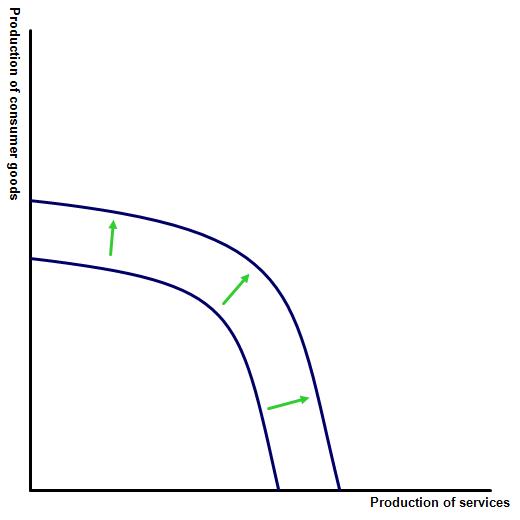 exports. The impact on the nation's current account balance, when raw copper prices fall, can be significant. Firstly in terms of export revenues, for example the extract identifies that if the world price falls to $1,250 per tonne, as predicted, revenues will decline by $2bn (answers ai and iii). In addition to higher revenues from exporting the finished product another advantage of the policy is that it will create employment converting the raw copper into the finished product. Table 1 shows that unemployment in the nation is high at 30% and so the newly created jobs will contribute towards economic activity in the country, as shown by the diagram illustrates.
  Twitter
  Facebook
  LinkedIn