People need to accept they are poorer, says Bank of England
Unwillingness to recognise Britain’s decline is fuelling inflation, says Huw Pill
British families must "accept that they’re worse off" after a surge in inflation and stop pushing for a pay rise, a senior Bank of England official has said.
Huw Pill, the Bank's chief economist, warned that rising prices have made the whole country poorer and said that attempts to bid up wages were merely prolonging the agony.
It came just hours after another senior Threadneedle Street official insisted that the Bank would have been powerless to bring inflation under control even if it had acted faster on interest rates.
Speaking in an interview on the Beyond Unprecedented podcast by Columbia Law School in New York, Mr Pill said: “[People] need to accept that they're worse off and stop trying to maintain their real spending power by bidding up prices, whether [through] higher wages or passing the energy costs through onto customers.”
Demands for higher pay were only driving prices up further and “generating inflation” as a result, he said.
Inflation was five times higher than the Bank of England’s 2pc target in March at 10.1pc.
Wages were rising at one of the fastest paces seen outside the pandemic in the three months to February at 6.6pc, stoking fears that price rises would prove persistent, with many businesses reporting difficulty recruiting sufficient workers to fill open positions, as the UK workforce remains below its pre-pandemic level.
Earlier on Tuesday, the Bank's deputy governor Ben Broadbent defended its record and denied that raising interest rates earlier could have made a meaningful difference.
Mr Broadbent said: “If we had started three, four, five, six months earlier [there would have been], I don’t know, maybe a maximum of half a point less inflation.”
Interest rates would have had to rise to nearly 20pc to completely stem the current bout of high inflation, he said.
Unions threatening to strike for better wages were quick to seize upon Mr Pill's comments, accusing him of being tone-deaf amid the largest hit to living standards in decades.
Laurence Turner, head of research and policy at GMB union, said: “It's staggeringly crass for one of the best-paid public officials to tell working people they should accept poverty wages during the worst cost of living crisis in living memory.”
This was echoed by Paul Nowak, general secretary of the Trades Union Congress, who said working people “don’t need lectures” but rather a pay rise.
Mr Pill’s remarks also angered trade bodies, with the Federation for Small Businesses (FSB) hitting out at the comments.
Tina McKenzie, its policy chairman, said: “Small businesses will be rightly angered by these tone-deaf comments from Mr Pill as they struggle with inflation that is still sky-high."
FSB national chair Martin McTague also described the remarks on price rises as "astonishingly out of touch", arguing that small firms have absorbed as much as possible.
Meanwhile, Simon French, chief economist at Panmure Gordon, recognised the risks of spiralling prices but advised Mr Pill to "engage brain before opening mouth", the Daily Mail reported.
Mr Pill compared raising wages and prices in response to high inflation to a game of pass the parcel, where each player was unwilling to accept the burden of higher prices that made them poorer.
He said: “That pass-the-parcel game that is going on here, that game is the one that’s generating inflation and that part of inflation can persist.”
Mr Pill added that there was a “reluctance to accept” that Britain had become collectively poorer but claimed it was an inevitable consequence of the surge in energy prices since the invasion of Ukraine.
He said people would have to eventually accept “that yes, we're all worse off and we all have to take our share.”
The comments risk reigniting criticism of the Bank of England for its handling of the worst inflation crisis in almost half a century.
The Bank’s Governor Andrew Bailey triggered anger last year when he urged workers not to ask for large pay rises and told businesses to stop trying to raise prices to beat inflation.
Critics argued Mr Bailey was trying to shift the blame for soaring prices onto workers and companies, rather than accepting the Bank’s own failings.
It came as former shadow chancellor Ed Balls said there was a need for greater public scrutiny of the Bank’s Financial Policy Committee (FPC), which is tasked with ensuring financial stability.
Mr Balls said: “As far as the FPC is concerned, there's much, much less scrutiny. Scrutiny is much less effective. There's a much less informed public debate.”
“I worry about whether we have transparency and process and clarity,” he added. Mr Balls was giving evidence alongside former chancellor George Osborne to the Lord’s Economic Affairs Committee.
Inflationdescribes a sustained increase in the general or average level of prices in an economy over a period of time.
ii. Real spending power (line 9) [2]
Refers to the purchasing power of consumers, in a given year, expressed in terms of the base year. So a 5% rise in spending power means that the wage earned by the average person is able to purchase 5% more goods and services than in the base year.
bi. Calculate the average rate of GDP growth, unemployment and inflation during the 4 years identified in table 2. [3]
Average
GDP growth
0.55%
Inflation
3.84%
Unemployment rate
3.75%
ii. Explain the difference between the real net disposable income (table 1) and GDP growth (table 2) [2]
Real net disposable income (table 1) refers to the average income received (after tax) and adjusted for changes in average prices. GDP growth is also adjusted for changes in prices and represents the growth in total income earned within the economy. This may be different from net disposable income because the former is influenced by the rate of personal taxation and refers specifically to per capita incomes. Economic growth may rise in a nation as a result of an increase in population, despite net disposable incomes falling.
c. Illustrate using an AD/AS diagram why 'passing the energy costs through onto customers' is driving up inflation? (line 10) [4]
Passing rising energy costs onto customers, or indeed any other production costs is an example of cost-push inflation, shown on the diagram to the right.
d. Explain why 'demands for higher pay ........ are driving prices up further and generating inflation' (line 11) [4]
Demands for higher pay are likely to create both cost-push and demand-pull inflationary pressures in the economy. Wage costs are a component of any firms overall production costs and so when wages rise a firms production costs will as well - particularly in labour intensive businesses.
Equally higher pay also contributes to demand-pull inflation, through higher rates of consumption Lines 13-13 state that 'wages rose at one of the fastest paces seen outside the pandemic in the three months to February at 6.6pc (lines 13-14). This is likely to raise levels of private consumption.
e. Explain why unemployment may have continued to remain low despite declining standards in this period? [4]
Rising unemployment would be a consequence of either the supply of labour rising (some of whom are unable to find work) or from lower demand for workers in the economy. The article notes that 'the UK workforce remains below its pre-pandemic level' (lines 14-15), reducing the supply of labour available which may explain the fall in unemployment that the UK is experiencing - it may well be that overall levels of employment are down despite the fall in unemployment. The high growth rates in 2021-2022, as the economy was released from its pandemic restrictions, may also have released a degree of pent up demand in the economy and increased demand for workers, despite falling living standards.
f. Illustrate how 'raising interest rates earlier might have made a meaningful difference' to inflation. (line 15-16) [4]
Rising interest rates reduce disposable incomes in the economy as the cost of loan purchases rises and saving is encouraged. This reduces the level of private consumption in the economy, leading to a fall in average prices in the economy, from P1 to P2.
g. Using the passage and your knowledge of economics, discuss the view that supply side policies are the only effective way for nations to secure long term growth in living standards. [15 marks]
Standard of living refers to the level of wealth, comfort and material goods available to citizens of a nation, while supply side policies can be described as policies aimed at increasing aggregate supply (AS), a shift from left to right. They enhance the productive capacities of an economy while improving the quality and quantity of the four factors of production. [Key terms identified].
Supply-side policies comes in two types, the first are free-market supply-side policies involve policies to increase competitiveness and free-market efficiency. For example, privatisation, deregulation, lower income tax rates, and reduced power of trade unions. The second includes interventionist supply-side policies involve government intervention to overcome market failure. For example, higher government spending on transport, education and communication. [Application].
The diagram to the right illustrates supply side policies, which have resulted in a rise in GDP from Y1 to Y2, representing economic growth and crucially, no cost to the economy in terms of inflationary pressure. [Application and explanation of diagram 1]. Successful supply side policies can also lower the natural rate of unemployment and can contribute to long-term economic growth without increasing the rate of inflation. [Analysis].
Successful implementation of supply-side policies might bring about improvements in the quantity and or quality of a nation's factors of production, illustrated by a shift outwards in the nation's productive capacity (diagram2). For instance, lines 14-15 of the text state that 'many businesses report difficulty recruiting sufficient workers to fill open positions, as the UK workforce remains below its pre-pandemic level'. A policy, therefore, of encouraging / coercing more workers to take up employment, particularly in low paid positions that are difficult to fill would allow the nation to increase its productive capacity. [Example of supply side improvement]. An example of a policy that might be effective in achieving this might include reducing access to out of work benefits or greater childcare provision, to encourage more people into the workforce. [Analysis].
Table 3 suggests that the UKs current productivity is below 3 other G7 nations and while the reasons for this productivity gap are likely to be multiple and complex, at least part of this gap is likely to be closed by investment in training and education, as a workforce equipped to produce better quality products is likely to be more productive and capable of contributing to rises in living standards over time. That said, this is one area that a nation finds difficult to improve in the short term, as the improvements take around than 10 or 15 years to observe. [Example of supply side improvement].
The productivity of capital might also be improved by the UK government providing incentives for businesses to improve their capital base, investing in new machinery as well as high value added industries such as bio-tech or IT services. [Example of supply side improvement].
Entrepreneurship can also be encouraged, through a series of subsidies and government incentives for new businesses. [Example of supply side improvement]. It is surely significant that nations such as Luxembourg and Ireland have adopted a policy of low corporation tax rates which has increased the number of companies locating into their countries, while the UK appears to be on a very different path - high levels of taxation that some believe discourages investment and drives down productivity in the long-term. [Real world example].
On the other hand, it could also be argued that supply-side policies may not be the only answer to improving living standards in the long-run. Despite their proven record they also do have weaknesses/limitations that reduce their effectiveness. [Second part of the essay introduced].
The first of these is that it may be difficult for the UK to implement a comprehensive range of policies. For example, supply-side measures imply tax cuts for the better off (to encourage enterprise and for people to work harder) and this may be unpopular because reducing tax rates for high-earning individuals has no direct benefit to mid- and low-threshold earners. Those receiving cuts to benefits will also be disadvantaged. [Counter argument identified]. Further as table 3 highlights, the UK's current national debt represents almost 100% of GDP, so the budgetary scope for tax cuts is limited - unless accompanied by cuts in public spending. [Application - use of the passage].
One supply side that the UK government may have some success with is the promotion of greater competition in labour markets, through the removal of restrictive practices, and labour market rigidities, such as the protection of employment. This might be unpopular, particularly with some employees and will be particularly resisted by the unions themselves. [Counter argument identified]. For example, table 4 highlights the extensive disruption caused to UK PLC by current strike action, with many days lost as a result of strikes by workers, unhappy with declines in their real wage levels. [Application - use of the passage]. Therefore, such policies might be effective in raising productivity levels (currently suffering as a result of workers withdrawing their labour)? Alternatively it might have the opposite impact and result in further unrest and more industrial action? [Evaluation].
For these reasons governments, whilst waiting for supply-side measures to work, the UK will almost certainly employ demand side policies in the form of contractionary fiscal and monetary policies, to bring inflation under control. For example, rises in interest rates and higher taxes will reduce aggregate demand in the economy, reducing inflationary pressures in the economy. This is illustrated on diagram 3 by a fall in aggregate demand, reducing the level of average prices (from P1 to P2) and a fall in real output from Y1 to Y2. This will make living standards worse in short-term and will certainly do little to improve the UKs sluggish productivity but at the current moment both the government and central bank probably consider that they little other choice? [Evaluation and third diagram explained].
In conclusion, therefore, the UK government and central bank will rely on contractionary demand side policies, in the immediate term, to reduce inflation and then rely on supply-side measures to secure economic growth and improved living standards in the long-term. [Conclusion].
Feedback
Which of the following best describes your feedback?


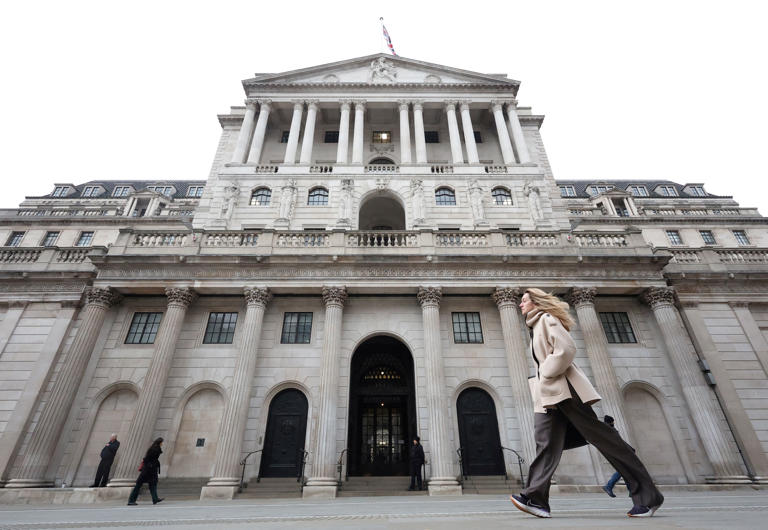 Unwillingness to recognise Britain’s decline is fuelling inflation, says Huw Pill
 Unions threatening to strike for better wages were quick to seize upon Mr Pill's comments, accusing him of being tone-deaf amid the largest hit to living standards in decades.
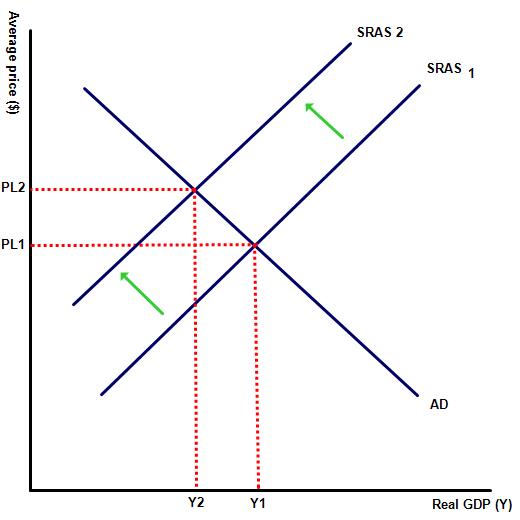 Passing rising energy costs onto customers, or indeed any other production costs is an example of cost-push inflation, shown on the diagram to the right.
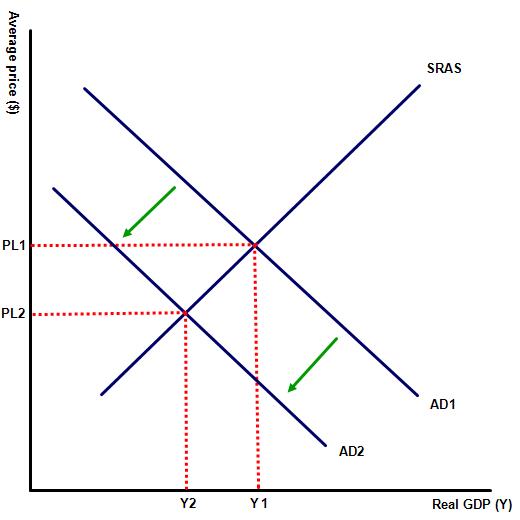 Rising interest rates reduce disposable incomes in the economy as the cost of loan purchases rises and saving is encouraged. This reduces the level of private consumption in the economy, leading to a fall in average prices in the economy, from P1 to P2.
.jpg) policies involve policies to increase competitiveness and free-market efficiency. For example, privatisation, deregulation, lower income tax rates, and reduced power of trade unions. The second includes interventionist supply-side policies involve government intervention to overcome market failure. For example, higher government spending on transport, education and communication.
policies involve policies to increase competitiveness and free-market efficiency. For example, privatisation, deregulation, lower income tax rates, and reduced power of trade unions. The second includes interventionist supply-side policies involve government intervention to overcome market failure. For example, higher government spending on transport, education and communication.  Twitter
  Facebook
  LinkedIn