Define the economics terms not used in the first part of the essay - perfect competition amd monopoly, productive and allocative efficiency.
Using accurate specialised terminology and a suitable diagram illustrate and explain productive and allocative efficiency.
Using accurate specialised terminology and an appropriate diagram, show and explain how firms in perfect competition are both allocatively and productively efficient.
Using accurate specialised terminology and an appropriate diagram explain how monopolies produce instead where MC=MR, below the productive and allocative efficiency level of output.
Using accurate specialised terminology and an appropriate diagram explain how monopolies, in some circumstances, can benefit from economies of scale and produce more efficiently than perfectly competitive firms.
Demonstrate a balanced approach both in support of and the arguments against the view that perfect competition will operate more efficiently than firms in monopoly.
Use real life examples, ideally from your own country, fixed to the command term.
Concise summary, consistent with the main body (do not add any new information in the conclusion)
Command term: Evaluate
In this example the command term evaluate requires candidates to make a judgement on how effective national income statistics are in making comparisons of the standard of living over time. Responses should include an overall conclusion, based on the evidence provided. [Command term addressed].
National income has already been defined in the first part of the response and measures improvements in GDP. By contrast, the standard of living is measured by HDI and measures life expectancy, education, and per capita income. [Key term].
So to what extent does national income data provides an accurate way of measuring living standards? [Main body of the essay introduced].
One argument in support of the argument that national income statistics provide an accurate reflection of the standard of living in a nation are that countries with high levels of GDP normally also have a high HDI. The wealthiest countries in the world are almost exclusively found in the Western world and without exception all have have levels of development also. [Argument in support of the statement identified]. This is unsurprising because human development index, which measures living standards, has three components and national income per capita is one of these. [Real world example].
Countries with a high GDP generally have happier (as measured by the happy planet index), healthier (as measured by life expectancy) and more educated (spending more years at school). [Second argument in support of the statement identified]. In part this is because wealthier nations have greater resources to invest in infrastructure and improvements to health and education, the other two components of HDI, while a larger economy provides a greater number of goods and services for its citizens. [Analysis]. Increased employment opportunities, higher salaries, a cleaner environment and superior healthcare services are also consistent with wealthy nations. [Analysis].
This link between living standards and economic growth can also be evidenced in fast growing nations, for example Singapore and Rwanda that have made significant strides in both GDP and HDI, by investing significantly in infrastructure projects as well as human infrastructure. Unsurprisingly both nations are among the fastest growing in their regions and have also enjoyed significant improvements in living standards. [Real world examples].
On the other hand, we cannot say definitively that the link between national income and living standards is linear, with national income data also containing weaknesses/limitations that make it less than a perfect measure of living standards. [Counter argument introduced].
One such weaknesses of using GDP as a measure of HDI is the impact of different price levels between different nations. Wages and salaries are much higher in nations with a high gross domestic product but very often so is the cost of living. [Argument in support of the statement identified]. For example, a glance at average income levels within Turkey and its neighbours in Europe highlights that workers, in Europe, earn sometimes three or four times more (on average) than comparable workers in Turkey. The same is true when comparing average earning levels in wealthy USA with its middle income neighbour, Mexico. Does this genuinely mean that the average person in either Mexico or Turkey is actually 3 or 4 times poorer (in real terms) than their counterparts just across the border? The answer is no, with those middle income developing nations also cheaper to live than their wealthier nations. In reality, therefore, the difference between the costs of living in those places makes up some of the difference in wages between wealthy and poorer nations. [Real world example].
A second weakness of the statement in the title is that that despite some uniformities countries do use slightly different methods of recording national income data. This means that there will always be a margin of error in any national income data. [Argument in support of the statement identified]. Examples of this might be the UK, Spain and India that record GDP using the output method, while many other major use the income method. This made it almost impossible to compare growth (or shrinkage) rates during the Covid pandemic of 2020-2021, as national income by output were much lower than when measured by income. This was because income levels were artificially boosted by government support packages, while the UK, India and Spain recorded their negative growth rates differently and appeared to fall by a much larger amount. [Real world example]. Equally, in any national income calculation it must be remembered that only official transactions are calculated, with grey market and unofficial payments discounted. While this makes little difference when comparing GDP levels within developed nations, the rate of 'unofficial' economic transactions is very high in many developing nations, again making a comparison of living standards difficult. [Evaluation].
A further weakness includes disparities in the distribution of income, with average GNI/GDP not indicating how the income in the nation is distributed. [Argument in support of the statement identified]. For example, USA and Europe are widely reported to be wealthy, fully developed nations. However, USA enjoys a higher average national income than almost all nations on the European continent, by a significant margin than some nations in Europe and yet poverty rates and income inequality are often perceived to be higher in USA as well. Does this mean that USA's higher average income level is something of a mirage, with the average dragged higher by a small number of very high net worth individuals? [Real world example]. Impossible to know for sure but it is likely that this explains, at least in part, the differences in income levels, rather than higher living standards in general. [Evaluation]. Equally, within developing nations, a small number of high net worth individuals can also distort average GDP figures, with the often quoted examples being Nigeria, Pakistan and Honduras. Three nations with similar GNI per capita but very different levels of citizens living in absolute poverty. [Real world example].
Finally, while GDP/GNI data is clearly good at making financial comparisons (though economists argue over the degree of accuracy), it does not always reflect non economic indicators of the standard of living, e.g. changes in working conditions, increased life expectancy and other quality of life indicators, new products, environmental conditions, defence expenditure, the size of underground economy or the value of non-marketed output e.t.c. [Conclusion].
Key terms used: national income statistics, standard of living, GDP/GNI, HDI, income inequality, unofficial economic transactions, national income calculations, poverty levels.


 Question 1: Unit 3 (excluding unit 3.3)
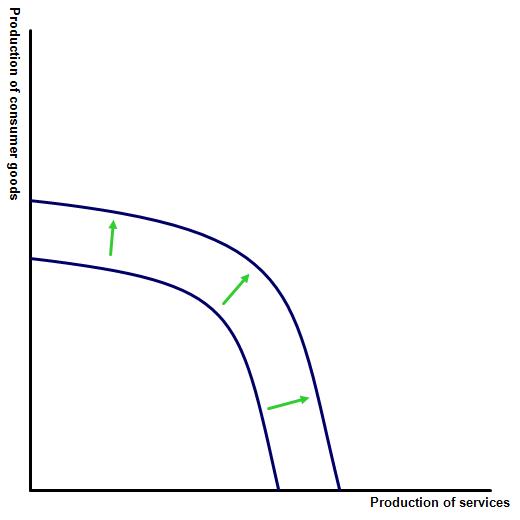 economy. National income can be measured by rises in GDP (gross domestic product) or gross national income (GNI). This can be calculated by either the output, expenditure or income method.
 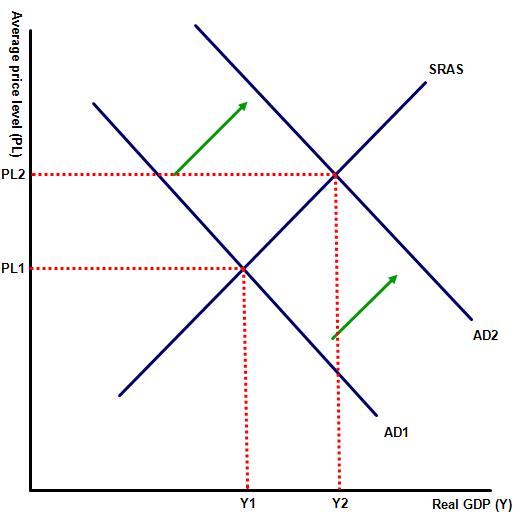 national income is not a perfect measure of living standards, it does provide a relatively accurate illustration of the living standards in a nation. This is then important because the state of the economy is a good indicator of the government's own performance. It is not uncommon for governments to pin their entire reputation on their own competence at managing the economy and providing a high living standards for its citizens.
  Twitter
  Facebook
  LinkedIn