


This page covers the nature of supply theory and the determinants of supply.
Defining supply
Supply is the willingness and ability of producers to offer a given quantity of a good for sale at a point in time and at a given price.
Supply refers to the resource element of the central economic problem of scarcity. The factors of production (land, labour, capital and enterprise) are used to produce goods and services on the supply side of a market.
The law of supply – how price affects quantity supplied
There is a positive causal relationship between the price of a good and the quantity demanded for it.
An increase in price leads to an increase in the quantity supplied of a good or service, and a decrease in price leads to a fall in quantity supplied.
The supply curve
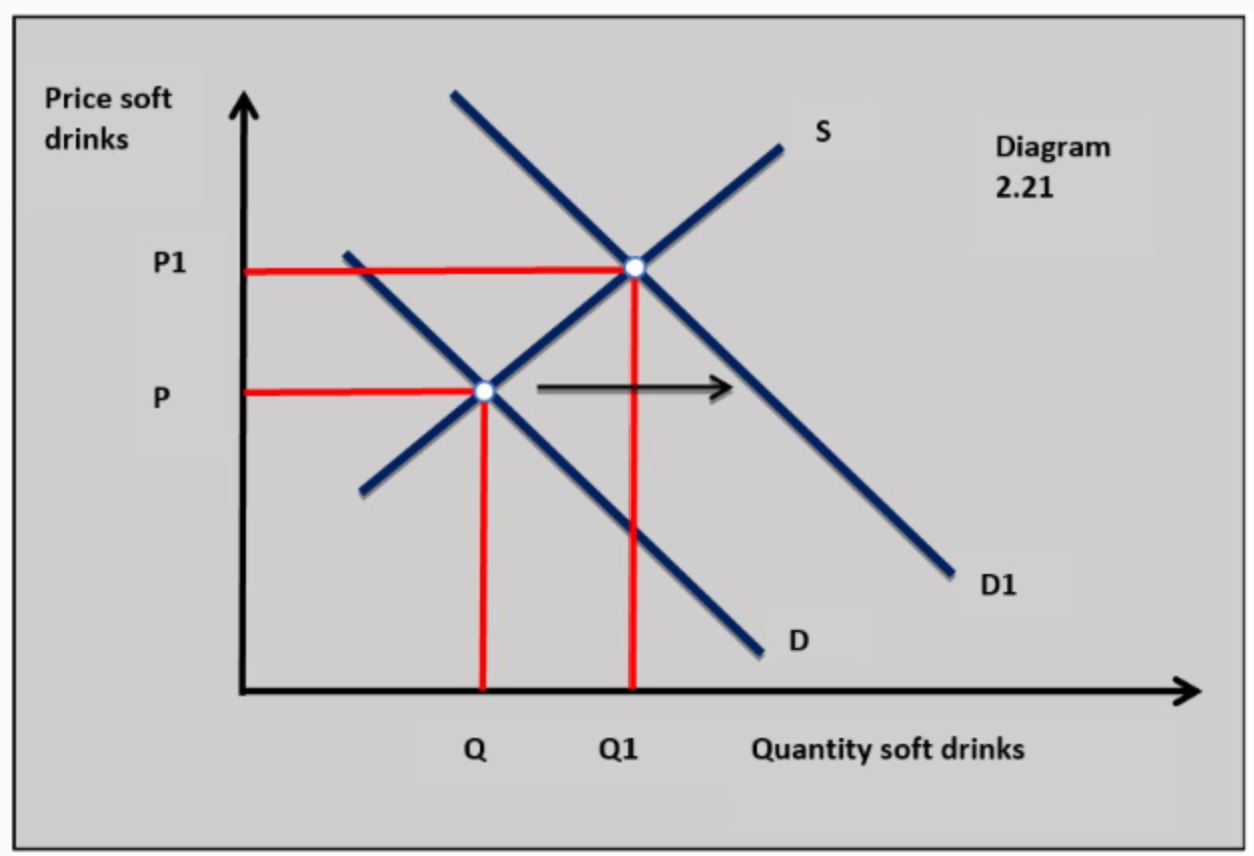
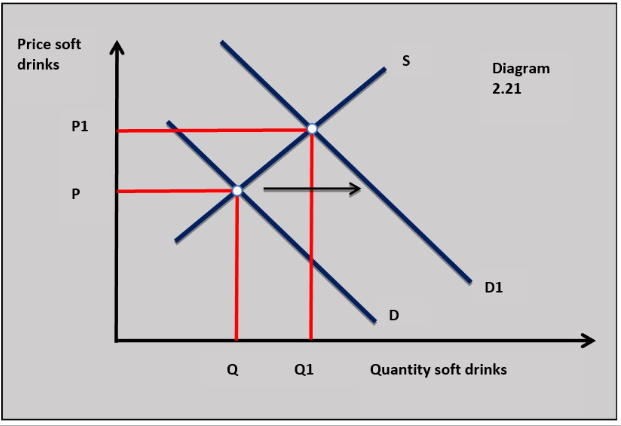
The positive relationship between price and quantity supplied is illustrated by the supply curve. Diagram 2.21 shows that a rise in the price of soft drinks from P to P1 leads to a rise in quantity supplied from Q to Q1 units.
As the price of a good changes, there is a movement along the supply curve.
Profits and supply
The increased profit from a higher price incentivises producers to increase supply.
The higher price also means the price can cover a higher unit cost of production.
Cost of factors of production
Changes in the costs of the factors of production used to produce a good or service will affect supply and cause the supply curve to shift.
A d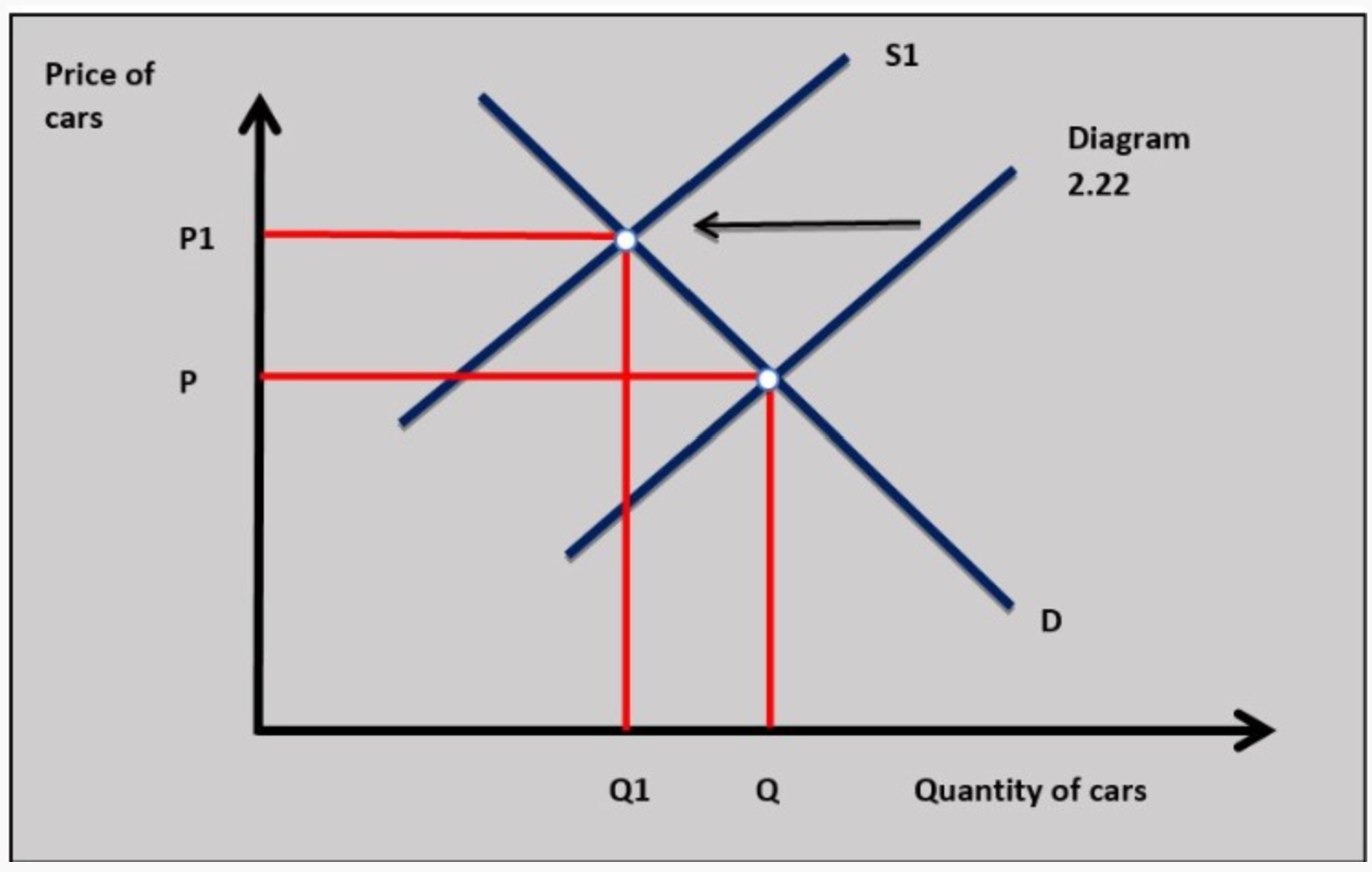 ecrease in the cost of factors of production would lead to an increase in supply (vice versa).
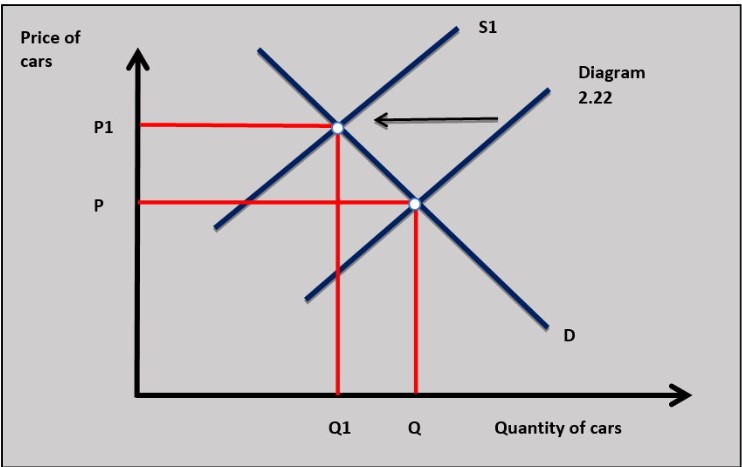
Diagram 2.22 illustrates the impact of a rise in costs of production on the market for cars where S shifts to S1. This leads to a rise in price from P to P1 and a fall in quantity from Q to Q1.
Competitive supply
Competitive supply is the different products a firm can produce with its factors of production.
Many firms produce a range of goods, and a change in the price of one good a firms sells may affect the quantity supplied of other products they sell.
For example a farmer can produce either wheat or corn. If the price of corn rises this leads to a fall in the supply of wheat as the farmer switches more resources to corn (vice versa).
Joint supply
When a production process yields two or more goods at the same time, this is called joint supply.
Increasing the supply of one good directly leads to an increase in the supply of a good it is in joint supply.
Examples include beef and leather, wheat and straw, and mutton and wool.
Technology
As technology in the production process advances, firms' production capacity increases.
As a result, businesses supply more to the market.
Supply-side shocks
A country or region may experience supply-side shocks, which lead to a decrease in supply.
This is true in agricultural markets where the weather can impact growing conditions.
Price expectations
Producer supply decisions can be affected by their expectations of what may happen to the price of a good or service in the future.
If producers expect prices to decrease, they may increase supply in the present (vice versa).
Number of producers in the market
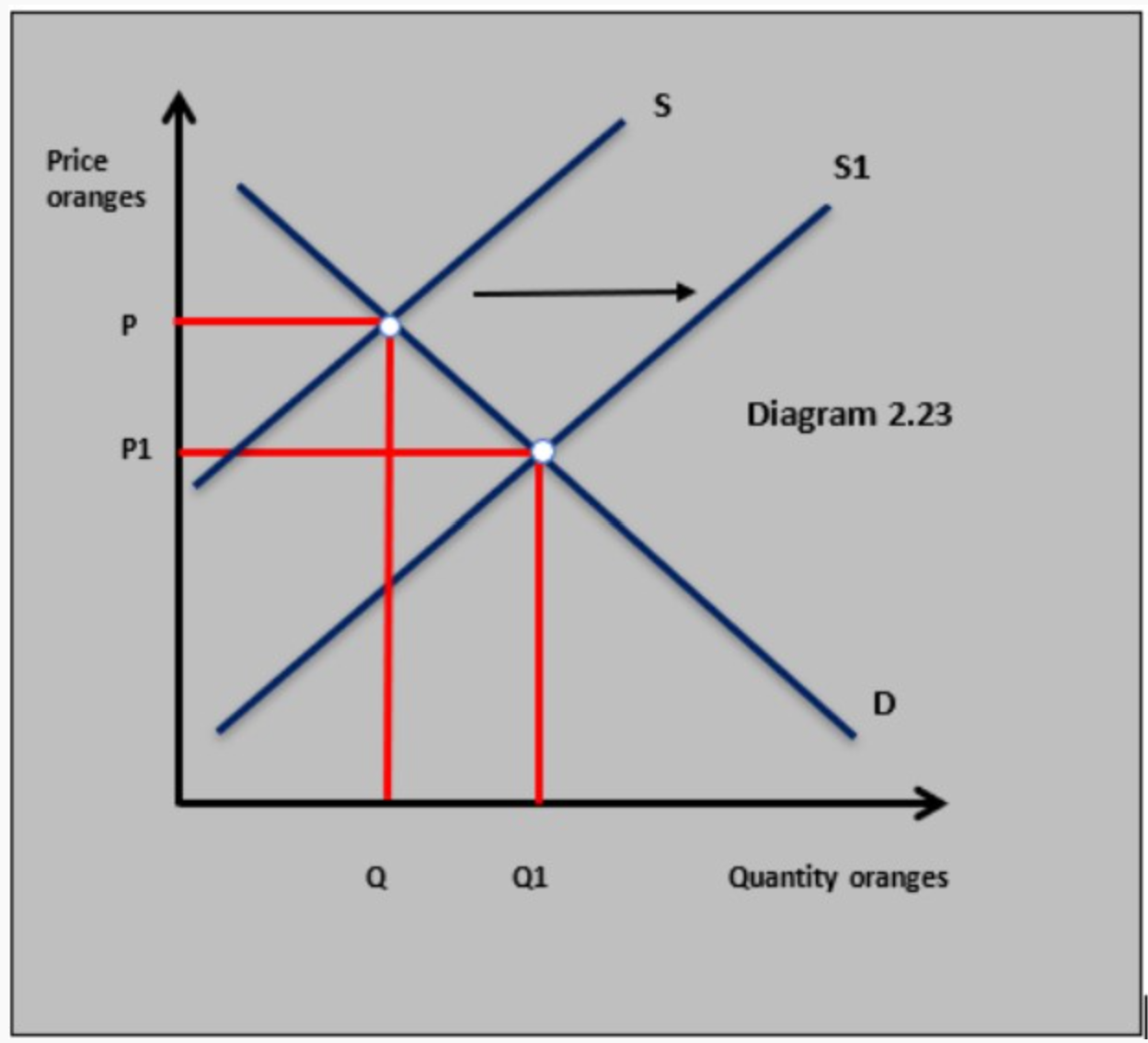 As firms enter a market, the supply in the market increases (vice versa).
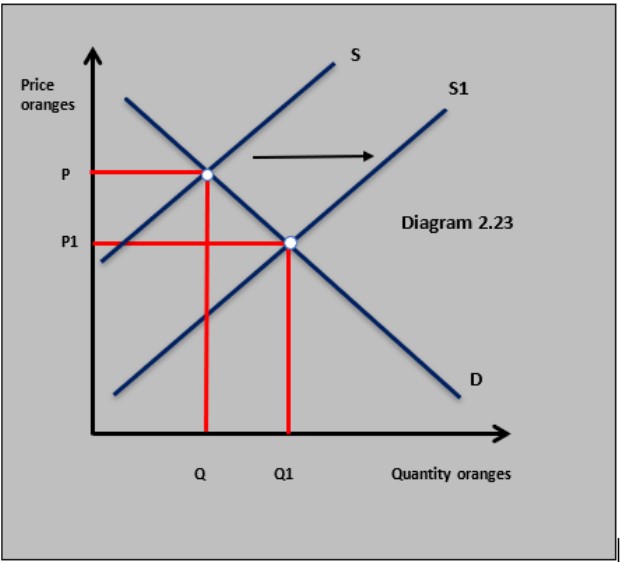
Diagram 2.23 illustrates the impact of a new producers entering the market for oranges. This has caused the supply of oranges to increase from S to S1, leading to a fall in price from P to P1 and an increase in output from Q to Q1.
Taxes
When indirect taxes are levied on goods and services supply decreases as a tax adds to a firm's costs of production.
Subsidies
A subsidy on a good or service increases supply as the cost of production decreases.
Explain how an increase in the market price of a good and a decrease in the cost of producing a good would affect the good's supply. [10]
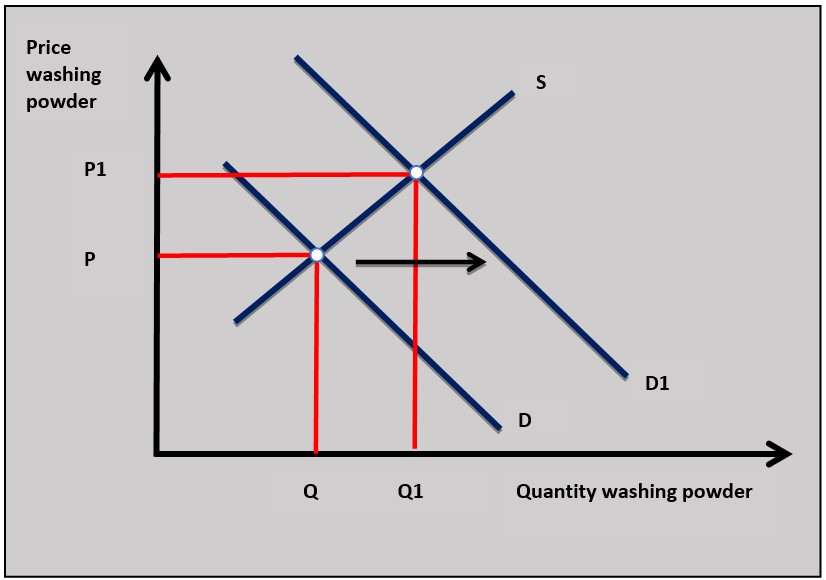 The increase in price leads to movement along the market supply curve. For example, an increase in the price of washing power leads to an increase in quantity supplied in the diagram.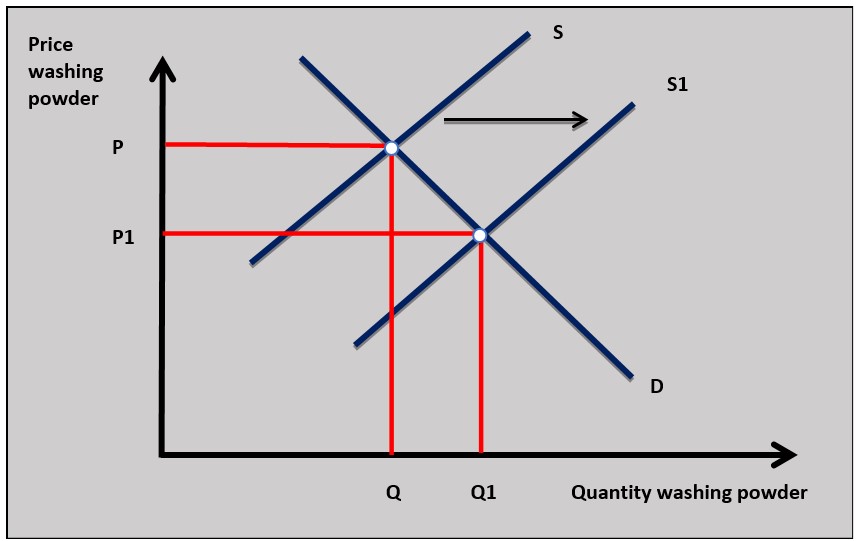
 Twitter
  Facebook
  LinkedIn