


Economic methodology refers to the way economists study the subject. As a social science, Economics tries to use scientific methods to explain how the economy at a microeconomic and macroeconomic level works.
 Economic methodology refers to the way economists study the subject. As a social science, Economics tries to use scientific methods to explain how the economy at a microeconomic and macroeconomic level works.
Economists test their theories, laws and ideas by using empirical evidence. This is evidence gathered by observing how people behave and by using data.
Positive economics
Positive economic statements are objective statements that can be proved true or false based on empirical evidence. Examples of positive economic statements:
- ‘If interest rates are increased economic growth falls’
- ‘As the price of a personal computer increases its quantity demanded will decrease’
- ‘As the value of the US dollar falls US exports get cheaper’
- ‘Economic growth leads to rising income inequality’
Positive economics is based on hypotheses, models and theories that are central to
Normative economics
Normative economic statements are value judgements that cannot be proved to be true or false based on empirical evidence. They often form
Normative statements are often the basis of economic policymaking.
Examples of normative economic statements:
- ‘Healthcare should be provided by the state’
- ‘Professional footballers are paid too much’
- ‘The governments ought to reduce interest rates to combat a recession’
- ‘Increased consumption of alcohol is bad for society’.
Economic thought - The origin of economic ideas
Adam Smith
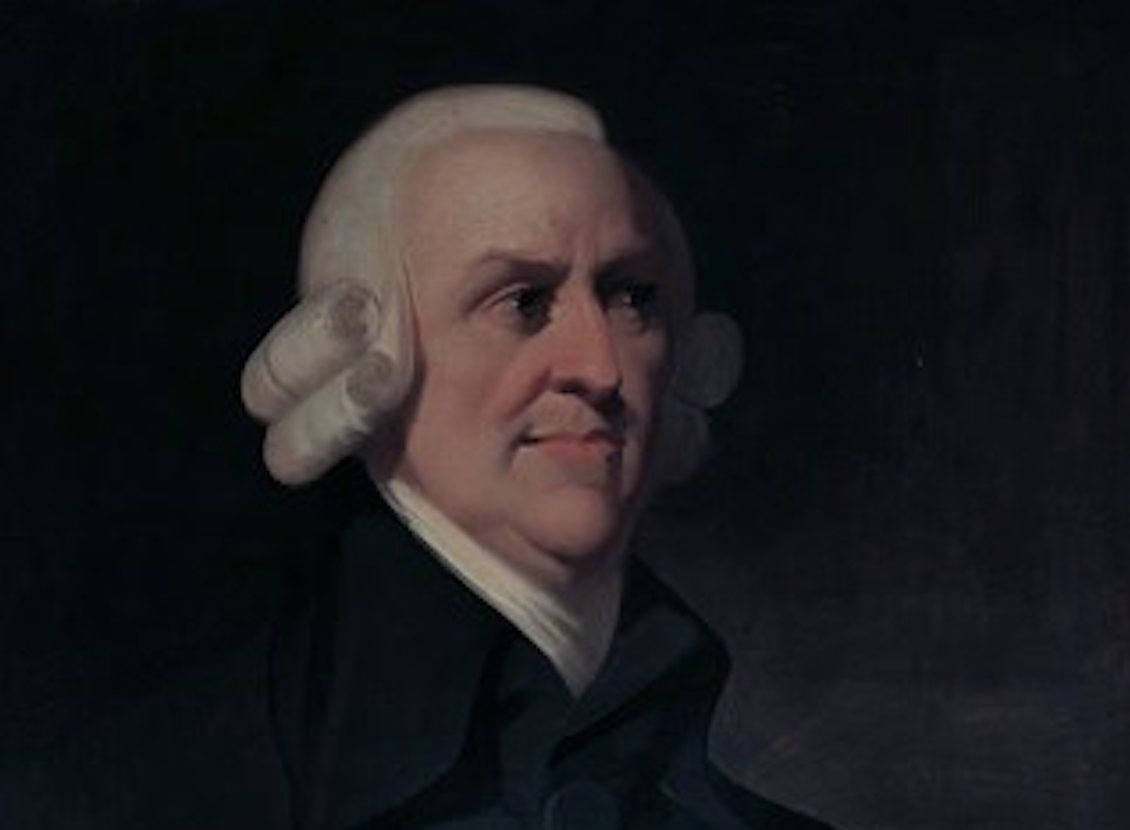
The 18th centuryScottish Economist and Philosopher Adam Smith wrote: An Inquiry into the Nature and Causes of the Wealth of Nations (1776).
The book was to argue that the over-regulated and controlled Economic systems that existed at the time hindered economic growth and development.
Smith believed that allowing a free and unhindered exchange of goods and services (laissez-faire markets) benefited buyers and sellers and increase incomes throughout the population.
Classical economic thought
Classical economics developed from Adam Smith’s theories into the 19th century.
Classical microeconomics considered areas such as consumer rationality and profit maximisation.
Say’s Law was developed by Jean Baptiste Say that states that producing goods and services creates demand.
Marxism
Karl Marx was an 19th century German Economist and Philosopher.
Marx was a critic of capitalism. He saw rich industrialists gaining wealth and power at the expense of ordinary workers and believed that workers would rise up to overthrow capitalism and replace it with socialism.
Marxism is a foundation for the command economic system.
John Maynard Keynes
Keynes is seen as one of the most important figures in the development of macroeconomics.
Keynes saw a more influential role for governments in the economy than classical economists did.
Much of his work was shaped by the Great Depression of the 1930s. Keynes’ book, The General Theory of Employment, Interest and Money.
Keynes' work was very influential on macroeconomic policymaking by western governments in the second half of the 20th century.
Monetarism
A central figure in monetarism was the Nobel Prize-winning economist, Milton Friedman in the 1970s.
Monetarism was based on the principle that the supply of money in the economy was the key determinant of economic growth and inflation.
Friedman advocated the use of interest rates by governments to control the money supply and the rate of inflation.
Monetarists believed that by using monetary policy to maintain low inflation a country would achieve the long-run economic growth needed for sustained improvements in prosperity.
Behavioural economics
Behavioural economics gives increasing importance to psychology and human behaviour in economic decision-making.
Richard Thaler won the Nobel Prize for Economics in 2017 for his work on Nudge Theory which looked at how indirect suggestion and positive reinforcement can make individuals act in a certain way.
Behavioural economics is different to classical economic thinking because it goes against rational economic decision-making.
Outline two characteristics of a positive economic statement. [4]
 Twitter
  Facebook
  LinkedIn