

Theme A
This page is going to contain revision resources for all the topics in theme A
Each page will contain the following sections. Great for revision.
- A student friendly list of revision points for the topic covering the understandings and skills expected
- A revision quiz which comments from an examiner to help understanding of the answers.
- A selection of written past paper style questions.
This next section will need rethinking because it would have to have 12 topics
A1.2 Ultrastructure of cells
- The simple structure of Prokaryote
Skills 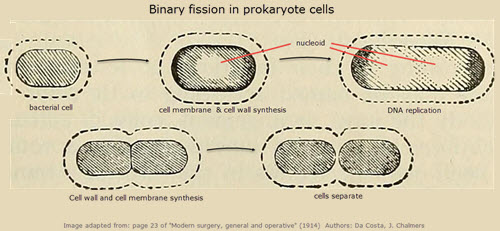
- Application: explain how the structure of prokaryotes allows them to divide by binary fission.
A2.1 M
- Particles move across membranes by simple diffusion, facilitated diffusion, osmosis and active transport.
- The fluidity of membranes allows materials to be taken into cells by endocytosis or released by exocytosis. Vesicles move materials within cells.
- Know how the structure helps the function of sodium–potassium pumps for active transport and potassium channels for facilitated diffusion in axons.
- Understand why tissues (or organs) waiting to be used in medical procedures must be bathed in a solution with the same osmolarity as the cytoplasm to prevent osmosis.
- Skill: Estimation of osmolarity in tissues by bathing samples in hypotonic and hypertonic solutions (Practical 2).
Skills
- Application: Structure and function of sodium–potassium pumps for active transport and potassium channels for facilitated diffusion in axons.
- Application: Tissues or organs to be used in medical procedures must be bathed in a solution with the same osmolarity as the cytoplasm to prevent osmosis.
- Skill: Estimation of osmolarity in tissues by bathing samples in hypotonic and hypertonic solutions (Practical 2).
A2.2 T
- The first cells must have arisen from non-living material.
- The origin of eukaryotic cells can be explained by the endosymbiotic theory.
- Mitosis is division of the nu
Skills
- Application: Evidence from Pasteur’s experiments that spontaneous generation of cells and organisms does not now occur on Earth.
- Application: The correlation between smoking and incidence of cancers.
- Skill: Identification of phases of mitosis in cells viewed with a microscope or in a micrograph (prophase, metaphase, anaphase and telophase).
- Skill: Determination of a mitotic index from a micrograph.

Introduction to cells 1.1
Cell theory states that all organisms are made of cells yet the structure of these cells is variable. While this is true in most cases there are some notable exceptions, like skeletal muscle.

Ultrastructure of cells 1.2
Eukaryote cells are larger than prokaryote cells and they have a more compartmentalised structure since endosymbiosis lead to the creation of organelles. Drawing eukaryote and prokaryote cells and recognising organelles is important.

Membrane structure 1.3
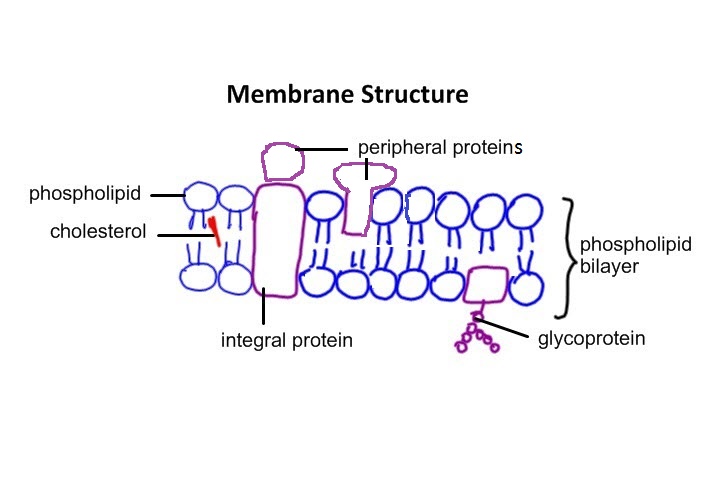
The first models of membranes included protein and phospholipids but not in the same structure as we see them today. In this topic the components of cell membranes are investigated and the structure of the membranes as fluid and dynamic structures.

Membrane transport 1.4
The membrane controls what enters and leaves the cell. This includes using diffusion and osmosis. Sometimes the membrane uses integral proteins as channels and pumps, sometimes the membrane surrounds something which needs moving into or out of the cell.

The origin of cells 1.5
Life has evolved from the first cells to all the cells we find in the huge diversity of today's organisms. This topic covers the origins of cells and the cell theory proposed by Pasteur and Schwaan when spontaneous generation of cells was believed.
.png)
Cell division 1.6
The control of cell division is just as essential for the survival of multicellular organisms as it is for the reproduction of single celled organisms. This topic covers the movement of chromosomes in the division of eukaryotic cells by mitosis.
 Twitter
  Facebook
  LinkedIn